Category: uControl

  • Update your system to uOS 11

    Update to uOS 11

    Please read this first before updating your system:

    This guide will assist you with updating your MHUB, MZMA or Zone Processor to uControl OS (uOS) 11.

    The update will enable support for both the new uControl App and the uControl Remote which can be configured after completing the steps in this support post.

    It is strongly recommended that you read this guide carefully before you start the update process.

    15 minutes (approximately). Difficulty: Easy.

    What this guide will cover:

    Before you start the update, check that:

    • Your HDA controller is currently running uOS (10.XX)
    • You have uControl 2016 app installed
    • Your HDA controller and uControl 2016 app have access to the Internet
    • All HDA devices and uControl 2016 app are visible on your network.
    • A note of all HDA device IPs on your network, or the ability to scan for them using an app like Fing.
    • IMPORTANT:Once your system has updated, uOS will need some additional configuration applied before the new uControl app or uControl Remote will start to work.

    STACKED SYSTEMS:
    It is recommended that every device in your stacked system is updated to uOS 11. Start by updating your master controller, followed by each MHUB or MZMA in your stack. If parts of your stacked system feature older MHUB’s or MHUB Audio systems running MHUB-OS then you will not need to update these.


    1. Load uControl 2016 app to start the update process.

    Load the uControl 2016 app and follow the instructions in this guide to update your system(s). Ensure that you complete this process for all HDA devices which can be upgraded to uOS 11 (see checklist above). Please note that any MHUB operating on MHUB-OS (black background colour) can not be updated to uOS 11.

    GUIDE: How to update your MHUB or HDA Device

    2. Check that your HDA system has updated to uOS 11.

    After the update completes, check uOS to confirm that it is running uOS 11 which can be done by visiting the IP address of your HDA device. Repeat this step for each HDA device on your network if you are operating a stacked system.

    uOS Setup Page
    Figure 1: Visit uOS and navigate to the “Setup” page to find your uOS version.
    Check if uOS has updated to version 11
    Figure 2: The software version will appear in the top 1/3 of the page under “uOS version”. The current version can also be seen on the footer of the page.

    If you are using a control system (Crestron, Control4, Savant, URC etc) then you’re complete at this stage. If you plan to use a HDA interface like uControl Remote or uControl app to control your system then continue to Step 3 below.

    3. You’re almost there! Prepare uOS for uControl app and uControl Remote.

    You need to make two small changes in uOS to make ensure that the new uControl app or uControl Remote will work when you are ready to configure them.

    Return back to the uOS “Setup” page and scroll down until you see the “Manage Zones” button, then select it.

    uOS Setup Page
    Figure 3: Go to uOS “Setup” page and scroll down the page until you see the “Manage Zones” option.

    A page will load with a table that lists all the Zones you have defined in uOS. Select the Zone that you wish to edit by tapping on the edit button (pencil icon)

    uOS Setup Page
    Figure 4: Tap on the Zone that you wish to update.

    You will now see all information pertaining to that particular zone, you will need to make two small changes for every zone in your system..

    uOS Setup Page
    Figure 5: The newly updated Manage Zones interface which summarises all zone information in one place.

    Change #1: Choose your video & audio source visibility.

    uOS 11 gives you the ability to show or hide any input that is connected to your HDA system. You can choose to show all inputs or filter them so that only AV inputs you select are visible in that zone. If you’re unsure or in a rush you can choose “Select All” and edit this option later.

    uOS Setup Page
    Figure 6:Choose to show all inputs in that zone or filter them so only the ones you want are visiable in uControl app and uControl Remote.

    If you select “Filter” a list of all inputs that your HDA system is controlling will appear with a green coloured switch, here you can choose to turn that input on or off inside that zone.

    uOS Setup Page
    Figure 7:If you have chosen to filter inputs in your desired zone then you can specify what inputs are available and what are not. This change will apply throughout the system.

    Change #2: Set the default volume for every zone.

    New to uOS 11 is a declaration of what device is controlling the volume. This is a new setting and will ensure that both uControl app and uControl Remote’s default volume keys are mapped to the device you choose here.

    uOS Setup Page
    Figure 8:Click on the “+” icon to select the device controlling the volume in your zone.
    uOS Setup Page
    Figure 9:uOS will display all available devices that are capable of controlling volume in your zone..

    IMPORTANT:
    You must repeat this step for every zone in your system if you wish to use the new uControl App or uControl Remote. If you fail to do this step uControl App will not work correctly and you may experience problems when configuring uControl Remote.

    Your HDA system is now ready to use!

    Congratulations, your HDA system is now updated and ready to work with the new uControl app and uControl Remote.

  • Installing, configuring & using uControl on iOS & Android

    uControl is HDANYWHERE’s free remote control app and is available for iOS and Android mobile platforms. Below is a guide to configuring and then using uControl.

    Checklist:

    • Your MHUB is powered on and connected as per the quick start guide (inside MHUB packaging) to make sure your MHUB is connected correctly to your source devices, displays and has an active network connection before proceeding.
    • Your android or iOS device is connected to the same network as your MHUB

    Connecting to your MHUB with uControl

    Before using uControl, it needs to be linked to your MHUB. Please follow the instructions below on how to do this.

    1. Download and install the app from the appropriate app store for your device.
    2. Open uControl and you will be shown the following options
      • Connect to MHUB system
      • Manually Connect
      • Setup Help
    3. Click on Connect to MHUB System, uControl will now search for MHUB devices and will show you options based on the results. If only one device is found uControl will automatically connect to it. If multiple devices are found, you will be shown the relevant options.
    4. The app will now attempt to pair with MHUB, This can take upto 10 seconds. Once connected to your MHUB, Press ‘Access uControl’.
    5. uControl is now linked to your MHUB.

    Using uControl

    After uControl is paired with your MHUB you can start to use it to control your device

    Source switching on uControl

    Source switching is performed by swiping left or right on the input bar and tapping on the required input. When input names are configured on MOSMHUB SETUP page they will be reflected here.

    To change to a different output, tap on the menu icon, and select the desired output from the popout menu, once again any output names configured on the MOSMHUB SETUP page will be reflected here.

    Using uControl to control source and display devices

    To enable uControl to control your source or display devices, an IR pack is required and must be installed on your MHUB. This IR pack contains all the relevant information including a screen layout for uControl.
    setup4a
    To install an IR pack navigate to the settings menu by pressing on the MENU icon, and tapping on SETTINGS located at the bottom off the pop-out menu. This will bring up the setting page, tap on DOWNLOAD UCONTROL PACKS. this will take you to the UCONTROL page on MHUB-OS.
    56
    78

    1. Using the drop-down menu, select which source or display you wish to install the IR pack for, This will bring up an expanded menu
    2. Click DEVICE TYPE to select the type of device that will be connected to the chosen port.
    3. Next click DEVICE MANUFACTURER and select the make of your device from the list and click on DOWNLOAD UCONTROL PACK – This will load two test commands from the downloaded IR Pack to confirm the commands are working as expected.
    4. Follow the onscreen instructions to test the two commands
    5. If the commands work as expected click YES to complete the process. If they do not, click NO and repeat step 4 until you find commands that work

    Repeat the above steps until all required IR packs are installed. Once complete, click DONE on iOS or the back button on your android device

    When an IR pack has been installed the uControl area of the screen is populated with the source device interface. These are device specific. Some control packs have multiple interface screens which can be navigated to by swiping left or right.
    ucontrol-control-types

    • Gesture Control – This is where you navigate your devices menu or guide using one or two finger gestures or motions on your mobile device, the majority of the screen is filled with the ‘Gesture control area’
    • Navigation Control – This mirrors a conventional remote control, with individual buttons for navigation.
    • Playhead Control – This screen contains common functions used when viewing a recorded source or watching a bluray. Such as Play, pause, fast forward and rewind.
    • Numeric Keypad – This screen shows a 0 to 9 keypad for entering channel numbers etc.
    • External App – This allows uControl to open external applications such as Sonos.

    When using gesture controls the following gestures are supported
    gesture-function

    1. Navigation – single finger swipe up, down, left or right
    2. Enter – single finger tap
    3. Play/Pause – two finger swipe up to play, two finger swipe down to pause.
  • Controlling Rako scenes and lights from uOS

    This guide will show you how to trigger Scenes or even individual Lights and Blinds using the Rako API

    • For Rako Hub API click Here
    • For Rako Bridge API click Here

    Rako Hub API


    Before you begin, you will need:

    • The Rako Hub IP address
    • A fully-commissioned Rako system with a Rako Hub on the same network as the HDA system
    • A fully-commissioned HDA or uControl system with the latest version of uOS (MHUB-OS does not support IP integrations) on the same network as the Rako system.
    • A tablet or laptop using any of the most popular browsers (or an iPhone with the uControl app, at the very least) on the same network as the HDA system.

    Step 1:Get data about the Rako system

    You need to know:

    • Room ID
    • Channel ID
    • Scene ID

    Use your browser: type http://[Rako Hub IP]/rako.xml (e.g.http://192.168.1.13/rako.xml)

    The Example below shows Room ID 17, Channel ID 1 and Scene ID 1


    <Room id="17"> -Room ID
    <Type>Lights</Type>
    <Title>Office</Title>
    <Channel id="1"> -Channel ID
    <type>Default</type>
    <Name>Office Spotlights</Name>
    <Levels>FFBF7F3F000000000000000000000000</Levels>
    </Channel>
    <Scene id="1"> -Scene ID
    <Name>White</Name>
    </Scene>
    </Channel>

    If no scenes are listed, default scenes are set as –

    Scene 1 – All on 100%
    Scene 2 – All on 75%
    Scene 3 – All on 50%
    Scene 4 – All on 25%
    Scene 0 – All Off

    Based off this we can build the command

    SUB,BASIC,V4,uControl
    SEND,17,1,SCENE,1


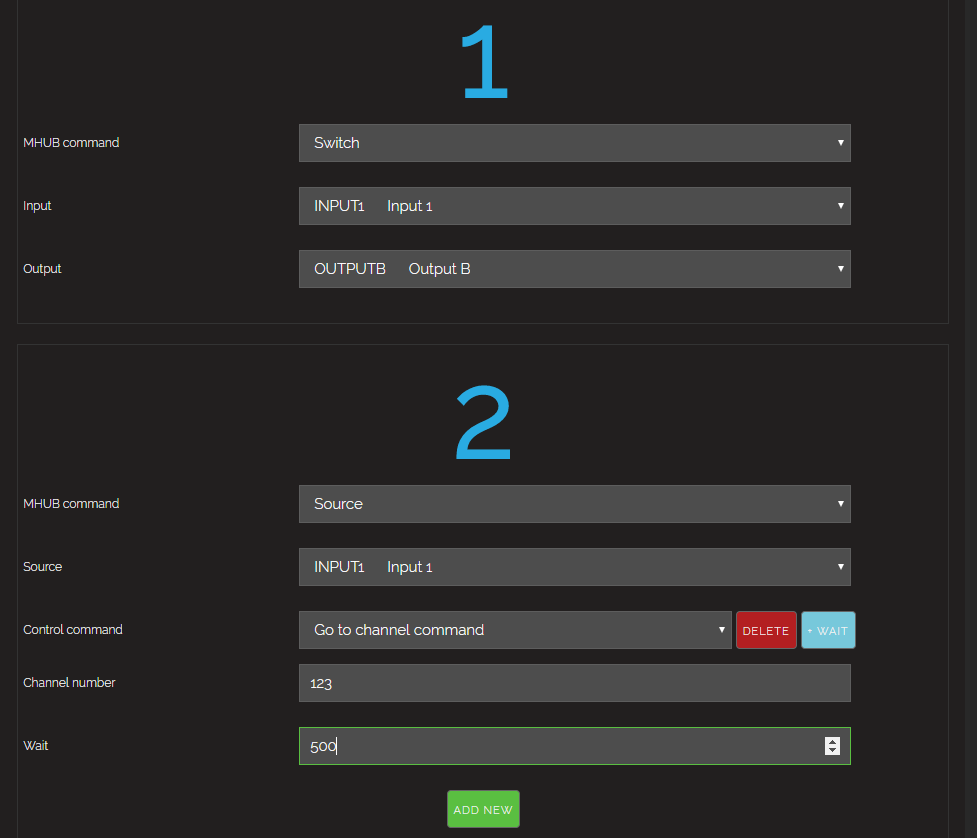
    Step 2:Build an IP Connection in uOS


    command-generator-link
    Examples of the most popular Rako commands – Rako Command Examples

    Rako Bridge API


    Before you begin, you will need:

    • A fully-commissioned Rako system with a Rako Hub on the same network as the HDA system
    • A fully-commissioned HDA or uControl system with the latest version of uOS (MHUB-OS does not support IP integrations) on the same network as the Rako system.
    • A tablet or laptop using any of the most popular browsers (or an iPhone with the uControl app, at the very least) on the same network as the HDA system.

    Step 1:Get data about the Rako system

    You need to know:

    • Room ID
    • Channel ID
    • Scene ID

    – Use Rasoft Pro if you set up the Rako yourself or have been given the Project File.
    – Use your browser: type http://[Rako Hub IP]/rako.xml (e.g.http://192.168.1.13/rako.xml)

    Example of Rako XML data


    Step 2:Build an IP Connection and Function in uOS


    Step 3:Build Functions to control individual Channels or trigger Scenes


    Examples of the most popular Rako commands – Rako Command Examples

  • Controlling Loxone from uOS

    This guide will show you how to trigger events in a Loxone system using a ‘Virtual Text Input’. This allows us to send a command that can trigger switching, lighting actions, shading and more.

    Before you begin, you will need:

    • The Loxone Miniserver IP address
    • A fully-commissioned Loxone system with the Miniserver on the same network as the HDA system
    • A fully-commissioned HDA or uControl system with the latest version of uOS (MHUB-OS does not support IP integrations) on the same network as the Loxone system.
    • A laptop running the Loxone config software
    • Access to uOS using any of the most popular browsers (or an iPhone with the uControl app, at the very least) on the same network as the HDA system


    Step 2:Build an IP Connection in uOS


    Examples of the most popular Loxone commands – Loxone Command Examples

  • ADB Control Packs

    With uOS 11.08 support for ADB control of android devices is now included.

    Supported Devices

    • Amazon FireTV
    • Nvidia Shield
    • Android/Google Powered TV’s

    To enable ADB control, ensure the device you want to control is powered on and awake. You will need to know the device’s IP address.

    Step 1 – Enabling Developer Options

    To be able to use ADB control you will need to enable Developer Mode.

    For Amazon devices, follow the instructions here – Enabling Developer Tools

    For other devices –

    1. Open the menu and go to Device Preferences > About.
    2. Scroll down until Build is highlighted, then tap ok several times. You will get an onscreen message that developer mode has been enabled.
    3. Click back, scroll to the bottom of the menu you will see { } Developer Options.
    4. Open the menu and enable developer options
    5. Scroll down to Enable network debugging

    Step 2 – Installing the ADB pack.

    In the example below we will install the pack for FireTV.

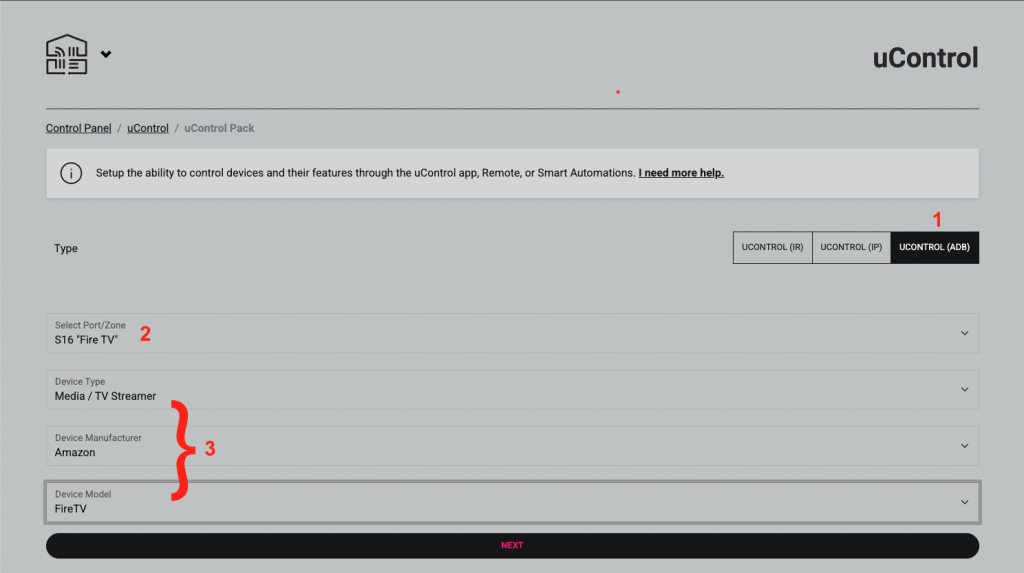
    2a – Select the pack


    1. Select uControl (ADB)
    2. Select the port or zone when the pack will be installed
    3. Select the device

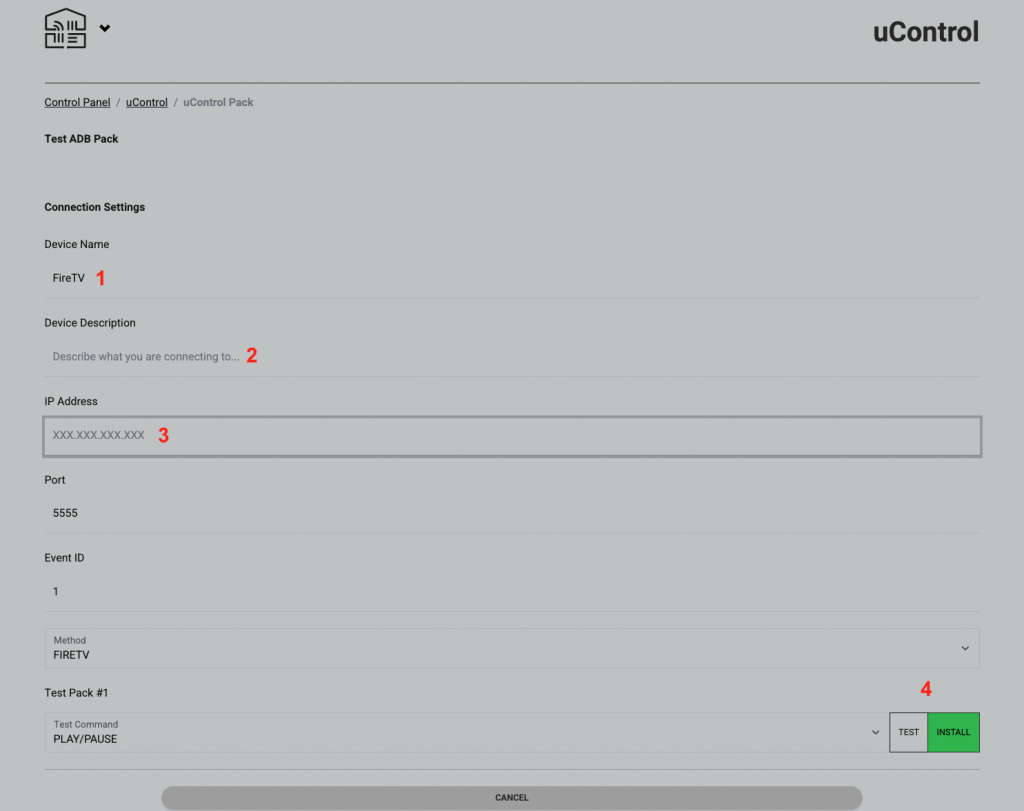
    2b – Test and confirm installation


    1. Use the default name or enter a custom one. This will be displayed on the uControl app and remote
    2. Describe what you are connecting to, this field is not compulsary to install the pack
    3. Enter the IP address in the fireTV in the format xxx.xxx.xxx.xxx For example, 192.168.0.25.
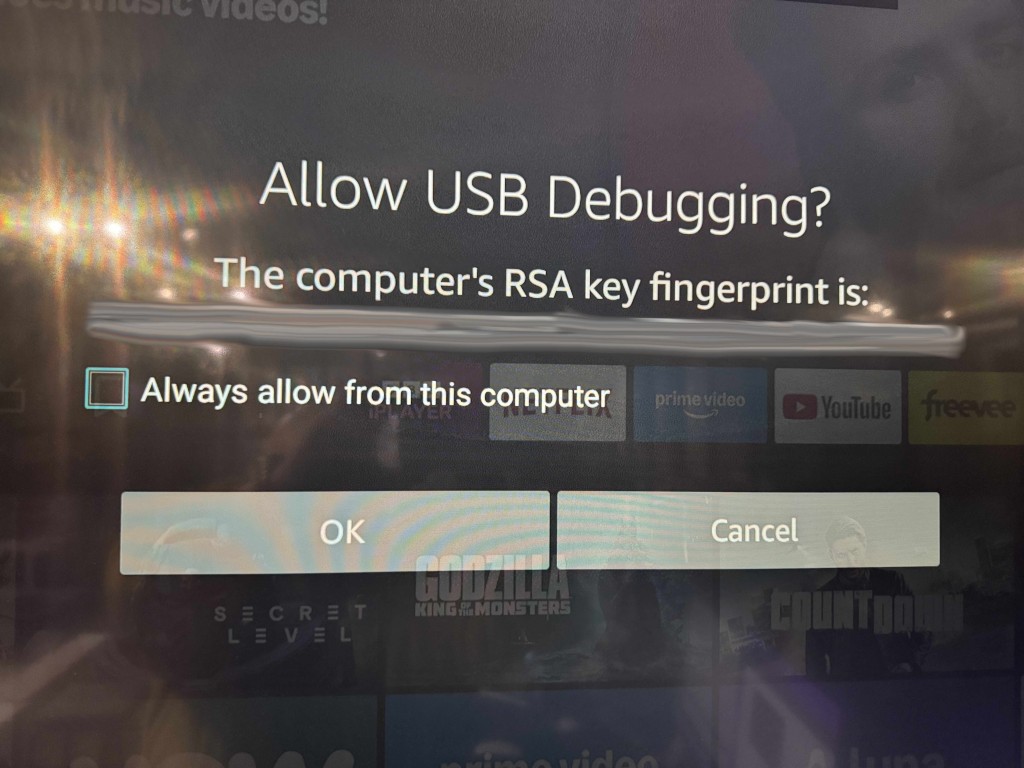
    4. IMPORTANT – the first time to connect to the device you will get an onscreen message like the one shown below. Please select always allow then click ok.
    5. Once tested, click install and the pack is ready to use

  • Creating a stacked MHUB system using uControl

    When an MHUB video device is paired with an MHUB AUDIO device we call that a Stack. Stacks can contain up to 4 MHUB products with 1 Master device and 3 slave devices. Master devices can be either VIDEO or AUDIO, slaves are AUDIO only.

    Below are a few examples of stacked systems.

    • Master : MHUBPRO4440, Slaves : 3x MHUBAUDIO64
    • Master : MHUBAUDIO64, Slaves : 3x MHUBAUDIO64
    • Master : MHUB4K44PRO, Slaves : 2x MHUBAUDIO64

    To create a stacked system you will need to download uControl (available on iOS and Android app stores), and your MHUB hardware will need to be powered on and connected to your network.

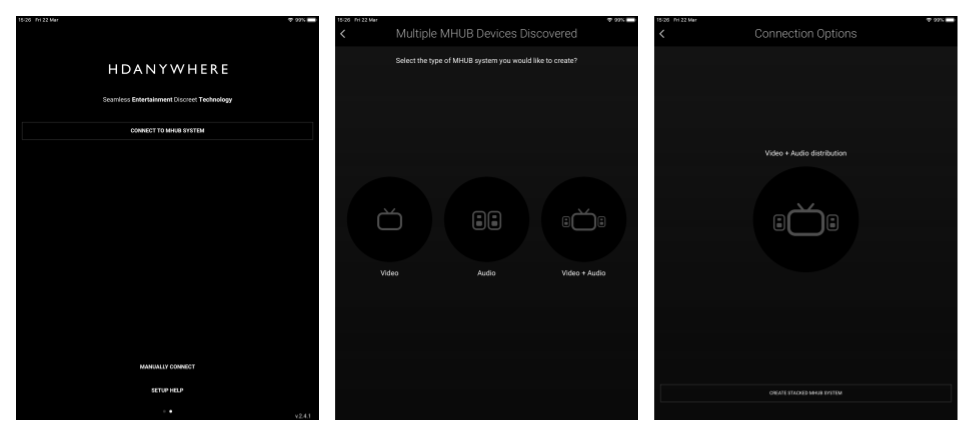
    Open the uControl app and select ‘Connect to MHUB System‘. The following screens will be displayed. uControl will search your network for all MHUB devices. To create a stack select ‘Video + Audio
    CS1
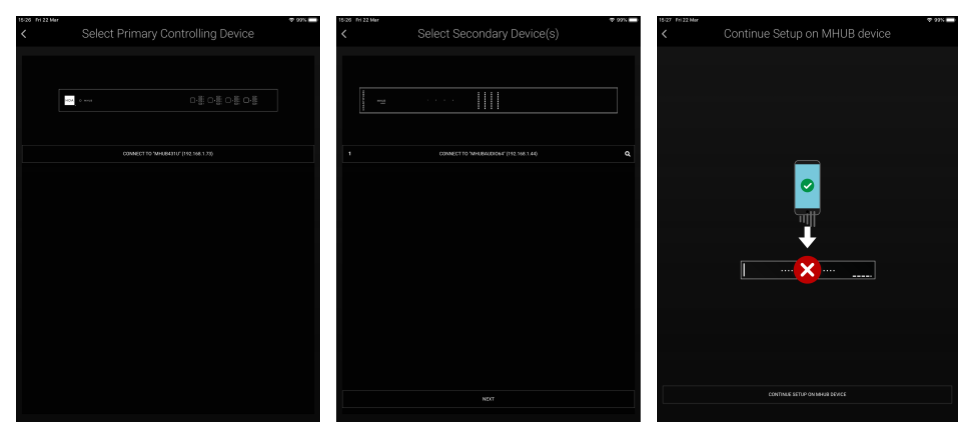
    uControl will now ask you to select first a master device, then upto 3 slave devices. (The order in which you select the slave devices will be their order in the stack. this is indicated by a numeric value on the left side of the device button. If you are unsure which MHUB AUDIO device is which you can simply click on the Identify button at the side of each device which will start the HDA and AUDIO logo flashing.)
    CS2

    Once this is done you will be taken to MHUB-OS where the first boot Process will be run.

    MHUB FIRST BOOT PROCESS(link)